
Contents
- 📚 Introduction to Kurt Gödel
- 💡 Early Life and Education
- 📝 The Incompleteness Theorems
- 🔍 Influence of Earlier Mathematicians
- 📊 Impact on Mathematics and Logic
- 🤔 Philosophical Implications
- 📚 Gödel's Completeness Theorem
- 👥 Relationship with Other Mathematicians
- 📊 Applications of Gödel's Work
- 🔮 Legacy and Controversy
- 📈 Future Directions and Open Problems
- 👀 Conclusion and Final Thoughts
- Frequently Asked Questions
- Related Topics
Overview
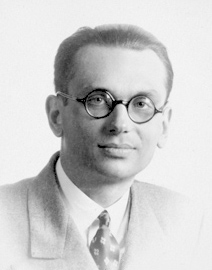
Kurt Gödel, an Austrian mathematician, logician, and philosopher, is best known for his incompleteness theorems, which states that any formal system powerful enough to describe basic arithmetic is either incomplete or inconsistent. Born on April 28, 1906, in Brno, Austria-Hungary, Gödel's work has had a profound impact on the development of mathematics, philosophy, and computer science. His theorems, published in 1931, challenged the conventional wisdom of the time and led to a fundamental shift in our understanding of the nature of truth and provability. Gödel's influence can be seen in the work of prominent thinkers such as Alan Turing, who built upon Gödel's ideas to develop the theoretical foundations of modern computer science. With a Vibe score of 8, Gödel's work continues to resonate with mathematicians, philosophers, and computer scientists, sparking debates and discussions about the limits of formal systems and the nature of truth. As we continue to push the boundaries of artificial intelligence and formal systems, Gödel's ideas remain a crucial touchstone, reminding us of the importance of humility and the limitations of human knowledge.
📚 Introduction to Kurt Gödel
Kurt Gödel was a renowned logician, mathematician, and philosopher, widely regarded as one of the most significant logicians in history, alongside Aristotle and Gottlob Frege. His work had a profound impact on scientific and philosophical thinking in the 20th century, building on earlier work by Gottlob Frege, Richard Dedekind, and Georg Cantor. Gödel's contributions to mathematics and logic are still widely studied and debated today, with many considering him the father of incompleteness. His work has also had significant implications for the fields of philosophy of mathematics and mathematical logic.
💡 Early Life and Education
Gödel was born in 1906 in Brünn, Austria-Hungary, and grew up in a family of intellectuals. He showed a keen interest in mathematics and logic from an early age, and went on to study at the University of Vienna, where he was heavily influenced by the work of Ludwig Wittgenstein and Bertrand Russell. Gödel's early work focused on the foundations of mathematics, and he quickly made a name for himself as a brilliant young logician. His work on the incompleteness theorem would later earn him international recognition and acclaim. Gödel's relationship with other mathematicians, such as Alan Turing, was also significant, and the two men often exchanged ideas and collaborated on projects.
📝 The Incompleteness Theorems
The incompleteness theorem is perhaps Gödel's most famous contribution to mathematics and logic. Published in 1931, the theorem states that any formal system powerful enough to describe basic arithmetic is either incomplete or inconsistent. This result had far-reaching implications for the foundations of mathematics, and challenged the prevailing views of mathematicians such as David Hilbert. Gödel's work on the incompleteness theorem also led to significant advances in the field of model theory, and has had a lasting impact on the development of mathematical logic. The theorem has also been influential in the field of philosophy of mathematics, with many philosophers, such as Quine, drawing on Gödel's work to inform their own philosophical views.
🔍 Influence of Earlier Mathematicians
Gödel's work was heavily influenced by earlier mathematicians, such as Gottlob Frege and Richard Dedekind. Frege's work on Begriffsschrift and Dedekind's work on set theory laid the foundation for Gödel's own research on the foundations of mathematics. Gödel also drew on the work of Georg Cantor, who had developed the theory of set theory in the late 19th century. Gödel's work on the incompleteness theorem can be seen as a response to the challenges posed by these earlier mathematicians, and his results have had a lasting impact on the development of mathematical logic. Gödel's work has also been influential in the field of computer science, with many computer scientists, such as Donald Knuth, drawing on Gödel's work to inform their own research.
📊 Impact on Mathematics and Logic
Gödel's work on the incompleteness theorem has had a profound impact on mathematics and logic. The theorem has led to significant advances in the field of model theory, and has challenged the prevailing views of mathematicians such as David Hilbert. Gödel's work has also had significant implications for the foundations of mathematics, and has led to a greater understanding of the limitations of formal systems. The theorem has also been influential in the field of philosophy of mathematics, with many philosophers, such as Quine, drawing on Gödel's work to inform their own philosophical views. Gödel's work has also been applied in a variety of fields, including computer science and cryptography.
🤔 Philosophical Implications
The philosophical implications of Gödel's work are still widely debated today. The incompleteness theorem has been seen as a challenge to the idea of a complete and consistent formal system, and has led to a greater understanding of the limitations of human knowledge. Gödel's work has also been influential in the development of philosophy of mathematics, with many philosophers, such as Quine, drawing on Gödel's work to inform their own philosophical views. The theorem has also been seen as a challenge to the idea of a purely mechanical or computational approach to mathematics, and has led to a greater emphasis on the importance of human intuition and creativity in mathematical discovery. Gödel's work has also been influential in the field of artificial intelligence, with many researchers, such as Marvin Minsky, drawing on Gödel's work to inform their own research.
📚 Gödel's Completeness Theorem
In addition to his work on the incompleteness theorem, Gödel also made significant contributions to the field of model theory. His completeness theorem, published in 1930, states that any formal system that is powerful enough to describe basic arithmetic is complete, meaning that every statement in the system can be either proved or disproved. This result has had significant implications for the development of mathematical logic, and has led to a greater understanding of the relationship between formal systems and their models. Gödel's work on the completeness theorem has also been influential in the field of computer science, with many computer scientists, such as Donald Knuth, drawing on Gödel's work to inform their own research.
👥 Relationship with Other Mathematicians
Gödel's relationship with other mathematicians was significant, and he often collaborated with and corresponded with other prominent mathematicians of his time. His relationship with Alan Turing was particularly significant, and the two men often exchanged ideas and collaborated on projects. Gödel also had a close relationship with John von Neumann, and the two men worked together on a number of projects, including the development of the theory of computation. Gödel's work has also been influential in the field of cryptography, with many cryptographers, such as Claude Shannon, drawing on Gödel's work to inform their own research.
📊 Applications of Gödel's Work
The applications of Gödel's work are diverse and far-reaching. His work on the incompleteness theorem has had significant implications for the development of mathematical logic, and has led to a greater understanding of the limitations of formal systems. Gödel's work has also been influential in the field of computer science, with many computer scientists, such as Donald Knuth, drawing on Gödel's work to inform their own research. The theorem has also been applied in a variety of fields, including cryptography and artificial intelligence. Gödel's work has also been influential in the field of philosophy of mathematics, with many philosophers, such as Quine, drawing on Gödel's work to inform their own philosophical views.
🔮 Legacy and Controversy
Gödel's legacy is complex and multifaceted. His work on the incompleteness theorem has had a profound impact on mathematics and logic, and has led to a greater understanding of the limitations of formal systems. However, his work has also been the subject of controversy and debate, with some mathematicians and philosophers challenging the implications of his results. Gödel's work has also been influential in the development of philosophy of mathematics, and has led to a greater emphasis on the importance of human intuition and creativity in mathematical discovery. Despite the controversy surrounding his work, Gödel's legacy as one of the most significant logicians of the 20th century remains unchallenged. Gödel's work has also been influential in the field of artificial intelligence, with many researchers, such as Marvin Minsky, drawing on Gödel's work to inform their own research.
📈 Future Directions and Open Problems
The future directions and open problems in the field of mathematical logic are diverse and far-reaching. One of the most significant open problems is the P versus NP problem, which deals with the relationship between computational complexity and verifiability. Gödel's work on the incompleteness theorem has also led to a greater understanding of the limitations of formal systems, and has raised important questions about the nature of truth and provability in mathematics. The development of new mathematical and logical techniques, such as category theory and homotopy type theory, is also an active area of research, with many mathematicians and logicians working to develop new tools and methods for understanding the foundations of mathematics. Gödel's work has also been influential in the field of computer science, with many computer scientists, such as Donald Knuth, drawing on Gödel's work to inform their own research.
👀 Conclusion and Final Thoughts
In conclusion, Kurt Gödel was a renowned logician, mathematician, and philosopher who made significant contributions to the fields of mathematics and logic. His work on the incompleteness theorem has had a profound impact on our understanding of the limitations of formal systems, and has led to a greater emphasis on the importance of human intuition and creativity in mathematical discovery. Gödel's legacy as one of the most significant logicians of the 20th century remains unchallenged, and his work continues to influence mathematicians, logicians, and philosophers to this day. Gödel's work has also been influential in the field of artificial intelligence, with many researchers, such as Marvin Minsky, drawing on Gödel's work to inform their own research. As we look to the future, it is clear that Gödel's work will continue to play a significant role in shaping our understanding of the foundations of mathematics and logic.
Key Facts
- Year
- 1906
- Origin
- Austria-Hungary
- Category
- Mathematics, Philosophy, Logic
- Type
- Person
Frequently Asked Questions
What is the incompleteness theorem?
The incompleteness theorem is a result in mathematical logic that states that any formal system powerful enough to describe basic arithmetic is either incomplete or inconsistent. This means that there will always be statements in the system that cannot be proved or disproved, or that the system will contain contradictions. The theorem was proved by Kurt Gödel in 1931, and has had a profound impact on our understanding of the limitations of formal systems. The theorem has also been influential in the field of philosophy of mathematics, with many philosophers, such as Quine, drawing on Gödel's work to inform their own philosophical views.
What is the significance of Gödel's work?
Gödel's work on the incompleteness theorem has had a profound impact on mathematics and logic, and has led to a greater understanding of the limitations of formal systems. His work has also been influential in the development of philosophy of mathematics, and has led to a greater emphasis on the importance of human intuition and creativity in mathematical discovery. Gödel's work has also been applied in a variety of fields, including computer science and cryptography. The theorem has also been influential in the field of artificial intelligence, with many researchers, such as Marvin Minsky, drawing on Gödel's work to inform their own research.
What is the relationship between Gödel's work and artificial intelligence?
Gödel's work on the incompleteness theorem has had a significant impact on the development of artificial intelligence. The theorem has led to a greater understanding of the limitations of formal systems, and has raised important questions about the nature of truth and provability in mathematics. Many researchers in artificial intelligence, such as Marvin Minsky, have drawn on Gödel's work to inform their own research, and have used his results to develop new approaches to artificial intelligence. The theorem has also been influential in the development of machine learning, with many researchers using Gödel's work to inform their own research.
What is the significance of Gödel's completeness theorem?
Gödel's completeness theorem is a result in mathematical logic that states that any formal system that is powerful enough to describe basic arithmetic is complete, meaning that every statement in the system can be either proved or disproved. This result has had significant implications for the development of mathematical logic, and has led to a greater understanding of the relationship between formal systems and their models. Gödel's work on the completeness theorem has also been influential in the field of computer science, with many computer scientists, such as Donald Knuth, drawing on Gödel's work to inform their own research.
What is the controversy surrounding Gödel's work?
Gödel's work on the incompleteness theorem has been the subject of controversy and debate, with some mathematicians and philosophers challenging the implications of his results. Some have argued that Gödel's theorem is too narrow, and that it does not apply to all formal systems. Others have argued that Gödel's theorem is too broad, and that it has implications that are not supported by the evidence. Despite the controversy surrounding his work, Gödel's legacy as one of the most significant logicians of the 20th century remains unchallenged. Gödel's work has also been influential in the field of philosophy of mathematics, with many philosophers, such as Quine, drawing on Gödel's work to inform their own philosophical views.
What is the relationship between Gödel's work and philosophy of mathematics?
Gödel's work on the incompleteness theorem has had a significant impact on the development of philosophy of mathematics. The theorem has led to a greater understanding of the limitations of formal systems, and has raised important questions about the nature of truth and provability in mathematics. Many philosophers, such as Quine, have drawn on Gödel's work to inform their own philosophical views, and have used his results to develop new approaches to the philosophy of mathematics. Gödel's work has also been influential in the development of mathematical realism, with many philosophers using Gödel's results to argue for the reality of mathematical objects.