
Contents
- 🔍 Introduction to Reason
- 💡 The Origins of Reason
- 📚 Reason in Philosophy
- 🔬 Reason in Science
- 📊 Reason in Mathematics
- 💭 The Psychology of Reason
- 🤝 Reason and Rationality
- 🌎 Cultural Significance of Reason
- 📈 The Future of Reason
- 📊 Measuring Reason: Vibe Scores and Perspective Breakdowns
- Frequently Asked Questions
- Related Topics
Overview
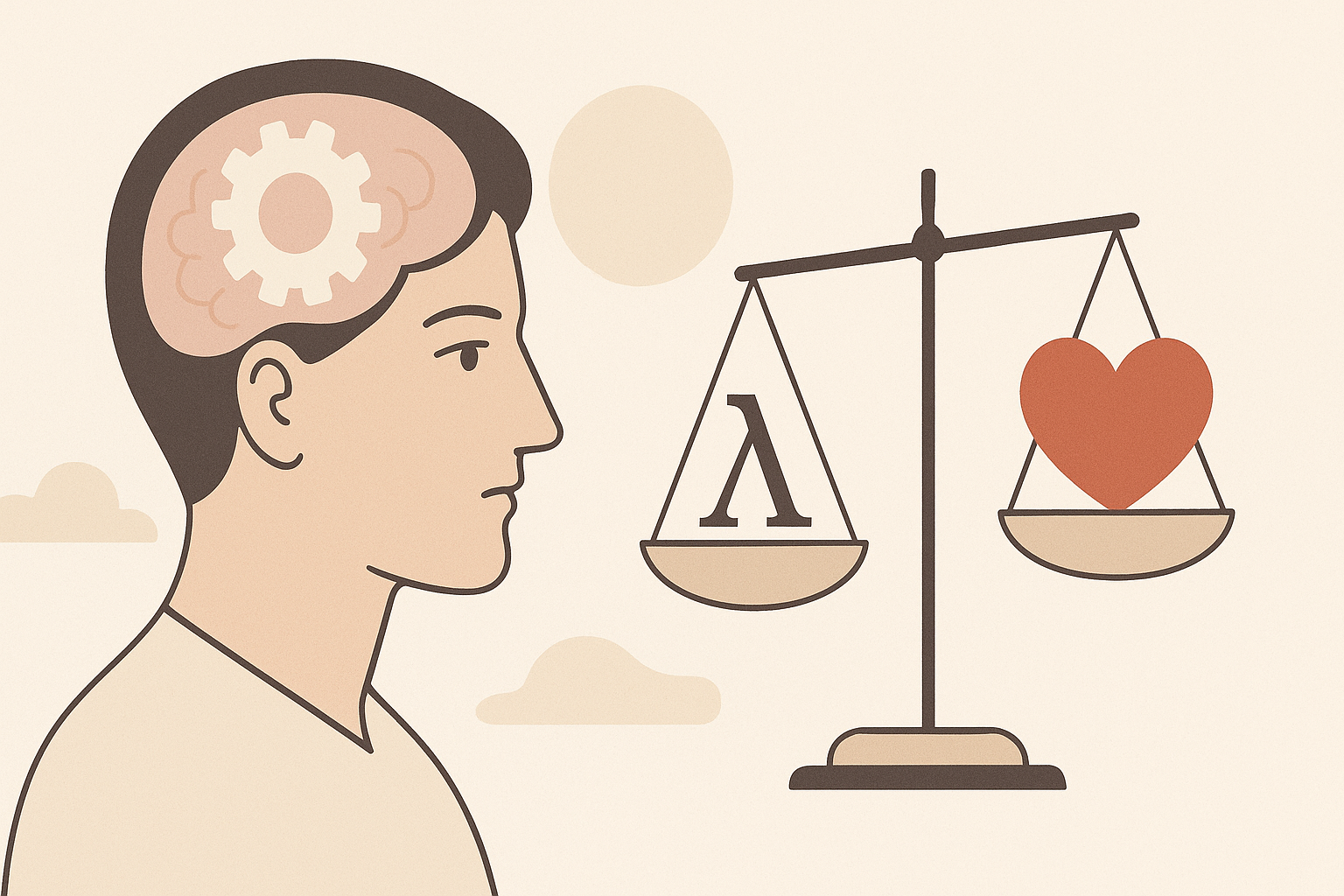
Reason is the capacity to consciously apply logic by drawing valid conclusions from new or existing information, with the aim of seeking truth. It is associated with activities considered characteristic of humans, including Philosophy, Religion, Science, Language, and Mathematics. The term 'reason' is sometimes used to refer to Rationality, although the latter is more about its application. As the philosopher Immanuel Kant once said, 'Reason is the faculty that enables us to understand the world.' The concept of reason has been debated by scholars such as Plato and Aristotle, who believed that reason was a key component of human nature. Reason is also closely tied to the concept of Critical Thinking, which involves analyzing information and evaluating arguments.
💡 The Origins of Reason
The origins of reason can be traced back to ancient civilizations, where philosophers such as Socrates and Plato developed the concept of reason as a means of understanding the world. The term 'reason' is derived from the Latin word 'ratio,' which means 'reason' or 'calculation.' Throughout history, reason has been associated with various intellectual and cultural movements, including the Enlightenment and the Scientific Revolution. As the scientist Isaac Newton once said, 'Reason is the foundation of all knowledge.' The development of reason has also been influenced by the works of René Descartes and John Locke, who contributed to the understanding of reason and its role in human knowledge.
📚 Reason in Philosophy
In Philosophy, reason is considered a fundamental concept, as it is the means by which we understand the world and make decisions. Philosophers such as Kant and Hegel have developed complex theories of reason, which have had a significant impact on the development of modern philosophy. The concept of reason is also closely tied to the concept of Ethics, which involves the study of moral principles and values. As the philosopher Jean-Paul Sartre once said, 'Reason is the foundation of human freedom.' The relationship between reason and ethics has been explored by scholars such as Friedrich Nietzsche and Martin Heidegger, who have examined the role of reason in shaping human values.
🔬 Reason in Science
In Science, reason is used to develop and test hypotheses, and to draw conclusions from empirical evidence. The scientific method, which is based on reason and experimentation, has been used to make numerous discoveries and advancements in fields such as Physics and Biology. As the scientist Albert Einstein once said, 'Reason is the foundation of all scientific knowledge.' The application of reason in science has been influenced by the works of Galileo Galilei and Charles Darwin, who used reason to develop new theories and challenge existing ones. The concept of reason is also closely tied to the concept of Scientific Method, which involves the use of reason and experimentation to develop and test scientific theories.
📊 Reason in Mathematics
In Mathematics, reason is used to develop and prove mathematical theorems, and to solve mathematical problems. Mathematicians such as Euclid and Isaac Newton have used reason to develop new mathematical concepts and theories, which have had a significant impact on the development of modern mathematics. As the mathematician Andrew Wiles once said, 'Reason is the foundation of all mathematical knowledge.' The application of reason in mathematics has been influenced by the works of Archimedes and Pierre Fermat, who used reason to develop new mathematical theories and solve complex problems. The concept of reason is also closely tied to the concept of Mathematical Proof, which involves the use of reason to prove mathematical theorems.
💭 The Psychology of Reason
The psychology of reason is a complex and multifaceted field, which involves the study of how humans use reason to make decisions and solve problems. Psychologists such as Daniel Kahneman and Amos Tversky have developed theories of reason, which have had a significant impact on our understanding of human cognition and decision-making. As the psychologist Steven Pinker once said, 'Reason is the foundation of human intelligence.' The application of reason in psychology has been influenced by the works of Sigmund Freud and B.F. Skinner, who used reason to develop new theories of human behavior and cognition. The concept of reason is also closely tied to the concept of Cognitive Bias, which involves the study of how humans use reason to make decisions and solve problems.
🤝 Reason and Rationality
Reason and Rationality are closely related concepts, although they are not identical. Rationality refers to the application of reason to achieve a specific goal or objective, whereas reason refers to the capacity to consciously apply logic and draw valid conclusions. As the philosopher John Rawls once said, 'Rationality is the application of reason to achieve justice.' The relationship between reason and rationality has been explored by scholars such as John Stuart Mill and Friedrich Hayek, who have examined the role of reason in shaping human values and institutions. The concept of reason is also closely tied to the concept of Utilitarianism, which involves the use of reason to maximize human happiness and well-being.
🌎 Cultural Significance of Reason
The cultural significance of reason cannot be overstated, as it has played a central role in the development of human civilization. Reason has been used to develop new technologies, to make scientific discoveries, and to create works of art and literature. As the philosopher Martha Nussbaum once said, 'Reason is the foundation of human culture.' The application of reason in culture has been influenced by the works of Leonardo da Vinci and William Shakespeare, who used reason to create new works of art and literature. The concept of reason is also closely tied to the concept of Humanism, which involves the use of reason to promote human dignity and well-being.
📈 The Future of Reason
The future of reason is uncertain, as it is influenced by a variety of factors, including technological advancements and cultural trends. However, it is clear that reason will continue to play a central role in human society, as it is the means by which we understand the world and make decisions. As the futurist Ray Kurzweil once said, 'Reason is the foundation of all future knowledge.' The application of reason in the future will be influenced by the works of Nick Bostrom and Eliezer Yudkowsky, who have examined the role of reason in shaping human values and institutions. The concept of reason is also closely tied to the concept of Artificial Intelligence, which involves the use of reason to develop new technologies and solve complex problems.
📊 Measuring Reason: Vibe Scores and Perspective Breakdowns
Measuring reason is a complex task, as it involves evaluating the ability to consciously apply logic and draw valid conclusions. One way to measure reason is to use Vibe Scores, which are a measure of cultural energy and resonance. Another way to measure reason is to use Perspective Breakdowns, which involve evaluating the different perspectives and arguments on a given topic. As the philosopher Daniel Dennett once said, 'Reason is the foundation of all knowledge, and it can be measured and evaluated.' The application of reason in measurement has been influenced by the works of Charles Peirce and William James, who used reason to develop new theories of knowledge and reality.
Key Facts
- Category
- topic
- Type
- topic
Frequently Asked Questions
What is reason?
Reason is the capacity to consciously apply logic by drawing valid conclusions from new or existing information, with the aim of seeking truth. It is associated with activities considered characteristic of humans, including philosophy, religion, science, language, and mathematics. The term 'reason' is sometimes used to refer to rationality, although the latter is more about its application. As the philosopher Immanuel Kant once said, 'Reason is the faculty that enables us to understand the world.'
How is reason used in science?
In science, reason is used to develop and test hypotheses, and to draw conclusions from empirical evidence. The scientific method, which is based on reason and experimentation, has been used to make numerous discoveries and advancements in fields such as physics and biology. As the scientist Albert Einstein once said, 'Reason is the foundation of all scientific knowledge.' The application of reason in science has been influenced by the works of Galileo Galilei and Charles Darwin, who used reason to develop new theories and challenge existing ones.
What is the relationship between reason and rationality?
Reason and rationality are closely related concepts, although they are not identical. Rationality refers to the application of reason to achieve a specific goal or objective, whereas reason refers to the capacity to consciously apply logic and draw valid conclusions. As the philosopher John Rawls once said, 'Rationality is the application of reason to achieve justice.' The relationship between reason and rationality has been explored by scholars such as John Stuart Mill and Friedrich Hayek, who have examined the role of reason in shaping human values and institutions.
How is reason used in mathematics?
In mathematics, reason is used to develop and prove mathematical theorems, and to solve mathematical problems. Mathematicians such as Euclid and Isaac Newton have used reason to develop new mathematical concepts and theories, which have had a significant impact on the development of modern mathematics. As the mathematician Andrew Wiles once said, 'Reason is the foundation of all mathematical knowledge.' The application of reason in mathematics has been influenced by the works of Archimedes and Pierre Fermat, who used reason to develop new mathematical theories and solve complex problems.
What is the cultural significance of reason?
The cultural significance of reason cannot be overstated, as it has played a central role in the development of human civilization. Reason has been used to develop new technologies, to make scientific discoveries, and to create works of art and literature. As the philosopher Martha Nussbaum once said, 'Reason is the foundation of human culture.' The application of reason in culture has been influenced by the works of Leonardo da Vinci and William Shakespeare, who used reason to create new works of art and literature.
How is reason measured?
Measuring reason is a complex task, as it involves evaluating the ability to consciously apply logic and draw valid conclusions. One way to measure reason is to use Vibe Scores, which are a measure of cultural energy and resonance. Another way to measure reason is to use Perspective Breakdowns, which involve evaluating the different perspectives and arguments on a given topic. As the philosopher Daniel Dennett once said, 'Reason is the foundation of all knowledge, and it can be measured and evaluated.'
What is the future of reason?
The future of reason is uncertain, as it is influenced by a variety of factors, including technological advancements and cultural trends. However, it is clear that reason will continue to play a central role in human society, as it is the means by which we understand the world and make decisions. As the futurist Ray Kurzweil once said, 'Reason is the foundation of all future knowledge.' The application of reason in the future will be influenced by the works of Nick Bostrom and Eliezer Yudkowsky, who have examined the role of reason in shaping human values and institutions.