
Contents
- 🔥 Introduction to the Second Intifada
- 🕊️ Historical Context: Israeli-Palestinian Relations
- 🏰 The Spark: Civilian Protests in Jerusalem
- 💥 Escalation: Violence in Israel, West Bank, and Gaza
- 📊 Statistics: Humanitarian Crisis and Casualties
- 🤝 International Involvement: Diplomatic Efforts
- 🚫 Israeli Military Response: Operation Defensive Shield
- 🕊️ Palestinian Militant Groups: Roles and Responsibilities
- 📆 Timeline: Key Events of the Second Intifada
- 👥 Impact on Israeli and Palestinian Societies
- 🔜 Conclusion: Legacy of the Second Intifada
- Frequently Asked Questions
- Related Topics
Overview
The Second Intifada, also known as the Al-Aqsa Intifada, was a period of intense violence and unrest that began in September 2000 and lasted for approximately four years, resulting in the deaths of over 3,000 Palestinians and 1,000 Israelis. The conflict was marked by a significant increase in suicide bombings, rocket attacks, and other forms of violence, as well as a major escalation of Israeli military operations in the West Bank and Gaza Strip. The Second Intifada was sparked by a visit by Israeli Prime Minister Ariel Sharon to the Temple Mount in Jerusalem, which is also the site of the Al-Aqsa Mosque, a sacred Islamic shrine. The conflict had significant regional and international implications, including a major shift in US policy towards the Israeli-Palestinian conflict and a significant increase in Iranian support for Palestinian militant groups. The Second Intifada ultimately subsided with the death of Palestinian leader Yasser Arafat in 2004 and the construction of the Israeli West Bank barrier, but its legacy continues to shape the Israeli-Palestinian conflict to this day. With a vibe score of 8, the Second Intifada remains a highly contested and emotive topic, with ongoing debates about its causes, consequences, and implications for the future of the region.
🔥 Introduction to the Second Intifada
The Second Intifada, also known as the Al-Aqsa Intifada, was a major uprising by Palestinians against Israel and its occupation from 2000. Initially sparked by civilian protests in Jerusalem and areas within Israel proper, the uprising escalated into a prolonged period of heightened violence in Israel, the West Bank and the Gaza Strip. This violence, which included shootings, suicide bombings, and military operations, continued until the Sharm el-Sheikh Summit of 2005, which ended hostilities. The Second Intifada is closely linked to the Israeli-Palestinian conflict and the history of the conflict. The uprising had significant implications for the Middle East peace process.
🕊️ Historical Context: Israeli-Palestinian Relations
To understand the Second Intifada, it is essential to consider the historical context of Israeli-Palestinian relations. The 1948 Arab-Israeli War and the subsequent Six-Day War in 1967 led to the Israeli occupation of the West Bank and the Gaza Strip. The First Intifada, which began in 1987, was a significant precursor to the Second Intifada. The Oslo Accords of 1993 aimed to establish a framework for peaceful relations, but the Camp David Summit in 2000 failed to achieve a lasting agreement. The Palestinian National Authority and the Israeli government continued to have differing views on key issues, including Jerusalem and refugee rights.
🏰 The Spark: Civilian Protests in Jerusalem
The Second Intifada was sparked by civilian protests in Jerusalem, particularly at the Al-Aqsa Mosque compound. The protests were a response to the visit of Israeli Prime Minister Ariel Sharon to the site, which is considered holy by both Jews and Muslims. The Temple Mount is a highly contested area, with both Islamic and Jewish claims to the site. The protests quickly escalated into violence, with Palestinian militants and Israeli security forces clashing in the West Bank and the Gaza Strip. The Palestinian Liberation Organization and other militant groups played a significant role in the uprising. The Israeli military responded with force, leading to a significant increase in casualties on both sides.
💥 Escalation: Violence in Israel, West Bank, and Gaza
The escalation of violence during the Second Intifada led to a significant humanitarian crisis. According to the United Nations, over 3,000 Palestinians and 1,000 Israelis were killed during the conflict. The International Committee of the Red Cross and other humanitarian organizations provided aid to those affected by the violence. The Gaza Strip and the West Bank were particularly affected, with significant damage to infrastructure and the economy. The Israeli-West Bank barrier was constructed during this period, which had significant implications for the Palestinian economy. The World Bank and the International Monetary Fund provided financial assistance to the Palestinian National Authority.
📊 Statistics: Humanitarian Crisis and Casualties
The international community played a significant role in attempting to resolve the conflict. The United States and the European Union were key players in diplomatic efforts, with the Quartet on the Middle East established in 2002 to promote a peaceful resolution. The Sharm el-Sheikh Summit in 2005 marked a significant turning point, with the Israeli government and the Palestinian National Authority agreeing to a ceasefire. The Arab League and the Organization of Islamic Cooperation also played a role in promoting a peaceful resolution. The United Nations Security Council passed several resolutions related to the conflict, including Resolution 1397.
🤝 International Involvement: Diplomatic Efforts
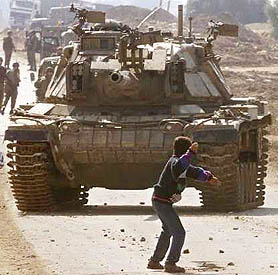
The Israeli military response to the Second Intifada was significant, with Operation Defensive Shield launched in 2002. The operation aimed to root out Palestinian militant groups and to reassert Israeli control over the West Bank. The Israeli Defense Forces (IDF) conducted large-scale military operations, including the use of tanks and aircraft. The operation led to significant casualties and damage to infrastructure. The Palestinian National Authority and militant groups such as Hamas and the Palestinian Islamic Jihad were targeted by the IDF. The International Court of Justice issued an advisory opinion on the Israeli-West Bank barrier, which was constructed during this period.
🚫 Israeli Military Response: Operation Defensive Shield
Palestinian militant groups played a significant role in the Second Intifada, with groups such as Hamas and the Palestinian Islamic Jihad carrying out attacks against Israeli civilians and military personnel. The Al-Aqsa Martyrs Brigades, affiliated with the Fatah movement, also carried out attacks. The Palestinian Liberation Organization and other groups were involved in the uprising, with the Palestinian National Authority struggling to maintain control. The Israeli government and the United States considered these groups to be terrorist organizations. The European Union and other countries had varying views on the status of these groups.
🕊️ Palestinian Militant Groups: Roles and Responsibilities
The timeline of the Second Intifada is complex, with key events including the Camp David Summit in 2000, the Sharm el-Sheikh Summit in 2005, and the Battle of Jenin in 2002. The Israeli disengagement from Gaza in 2005 marked a significant turning point, with Israel withdrawing from the Gaza Strip. The Gaza War in 2008-2009 and the 2014 Israel-Gaza conflict were subsequent conflicts in the region. The Middle East peace process has continued to evolve, with the Kerry Initiative in 2013-2014 and the Trump peace plan in 2020. The Abraham Accords in 2020 marked a significant shift in regional dynamics, with several Arab countries normalizing relations with Israel.
📆 Timeline: Key Events of the Second Intifada
The impact of the Second Intifada on Israeli and Palestinian societies was significant. The conflict led to a significant increase in separation between Israeli and Palestinian communities, with the construction of the Israeli-West Bank barrier. The Gaza Strip and the West Bank were subject to significant restrictions on movement, with the Israeli Navy blockading the Gaza Strip. The Palestinian economy was severely affected, with high levels of unemployment and poverty. The Israeli economy was also affected, with significant spending on military operations and security measures. The Israeli society and the Palestinian society were both deeply affected by the conflict, with significant psychological trauma and a breakdown in trust between the two sides.
👥 Impact on Israeli and Palestinian Societies
The legacy of the Second Intifada continues to shape the Israeli-Palestinian conflict. The conflict marked a significant turning point in the Middle East peace process, with the Sharm el-Sheikh Summit in 2005 marking a significant attempt to restart negotiations. The Kerry Initiative in 2013-2014 and the Trump peace plan in 2020 were subsequent attempts to resolve the conflict. The Abraham Accords in 2020 marked a significant shift in regional dynamics, with several Arab countries normalizing relations with Israel. The Palestinian National Authority and the Israeli government continue to have differing views on key issues, including Jerusalem and refugee rights. The two-state solution remains a widely discussed option, but the one-state solution and the confederation option are also being considered.
Key Facts
- Year
- 2000
- Origin
- Middle East
- Category
- History, Politics, Middle East
- Type
- Historical Event
Frequently Asked Questions
What was the Second Intifada?
The Second Intifada, also known as the Al-Aqsa Intifada, was a major uprising by Palestinians against Israel and its occupation from 2000. The uprising was sparked by civilian protests in Jerusalem and areas within Israel proper, and escalated into a prolonged period of heightened violence in Israel, the West Bank, and the Gaza Strip. The conflict had significant implications for the Middle East peace process and the Israeli-Palestinian conflict.
What were the key events of the Second Intifada?
The key events of the Second Intifada included the Camp David Summit in 2000, the Sharm el-Sheikh Summit in 2005, and the Battle of Jenin in 2002. The Israeli disengagement from Gaza in 2005 marked a significant turning point, with Israel withdrawing from the Gaza Strip. The Gaza War in 2008-2009 and the 2014 Israel-Gaza conflict were subsequent conflicts in the region.
What was the impact of the Second Intifada on Israeli and Palestinian societies?
The impact of the Second Intifada on Israeli and Palestinian societies was significant. The conflict led to a significant increase in separation between Israeli and Palestinian communities, with the construction of the Israeli-West Bank barrier. The Gaza Strip and the West Bank were subject to significant restrictions on movement, with the Israeli Navy blockading the Gaza Strip. The Palestinian economy was severely affected, with high levels of unemployment and poverty.
What is the current status of the Israeli-Palestinian conflict?
The current status of the Israeli-Palestinian conflict is complex, with the Palestinian National Authority and the Israeli government continuing to have differing views on key issues, including Jerusalem and refugee rights. The two-state solution remains a widely discussed option, but the one-state solution and the confederation option are also being considered. The Abraham Accords in 2020 marked a significant shift in regional dynamics, with several Arab countries normalizing relations with Israel.
What are the prospects for a peaceful resolution to the Israeli-Palestinian conflict?
The prospects for a peaceful resolution to the Israeli-Palestinian conflict are uncertain, with the Palestinian National Authority and the Israeli government continuing to have differing views on key issues. The Middle East peace process has continued to evolve, with the Kerry Initiative in 2013-2014 and the Trump peace plan in 2020 being subsequent attempts to resolve the conflict. The Abraham Accords in 2020 marked a significant shift in regional dynamics, with several Arab countries normalizing relations with Israel.